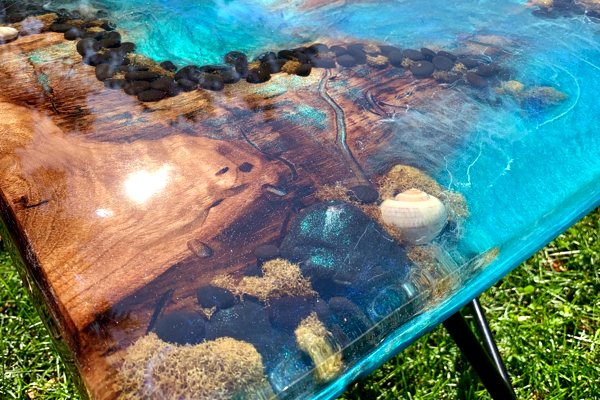
Epoxy resin has become a go-to choice for creating smooth, glasslike finishes on bar tops, table tops, counters, river tables, and countless DIY projects. But one of the most important factors to understand before you start pouring is thickness. The thickness of each pour directly affects how the epoxy cures, how durable the final finish is, and whether you’ll end up with a crystal-clear surface—or a cloudy, cracked mess.
Many beginners assume that pouring epoxy thicker will save time or produce a stronger result, but the opposite is often true. The chemical reaction that makes epoxy cure generates heat, and if too much resin is poured at once, that heat builds up faster than it can safely release. The result can be bubbling, warping, discoloration, or even incomplete curing that leaves parts of your project tacky.
This article will guide you through why thickness matters, the differences between epoxy types, how to get your pours just right, and why using a high-quality product like UltraClear Epoxy makes all the difference for long-lasting results.

Why Thickness Matters
The thickness of an epoxy pour isn’t just a technical detail—it directly determines the success, strength, and longevity of the project. Epoxy resin undergoes an exothermic chemical reaction as it cures, which means that the amount of heat generated is directly tied to how much material is poured at once. Pouring too thin or too thick can create problems that affect clarity, smoothness, and durability.
When the pour is too thin
For thin pours, the main concern is coverage and strength. If an epoxy coat is applied too thinly, it may not self-level properly, leaving uneven areas, streaks, or dry patches that compromise the glossy finish. A thin layer is also more prone to showing scratches or surface imperfections over time.
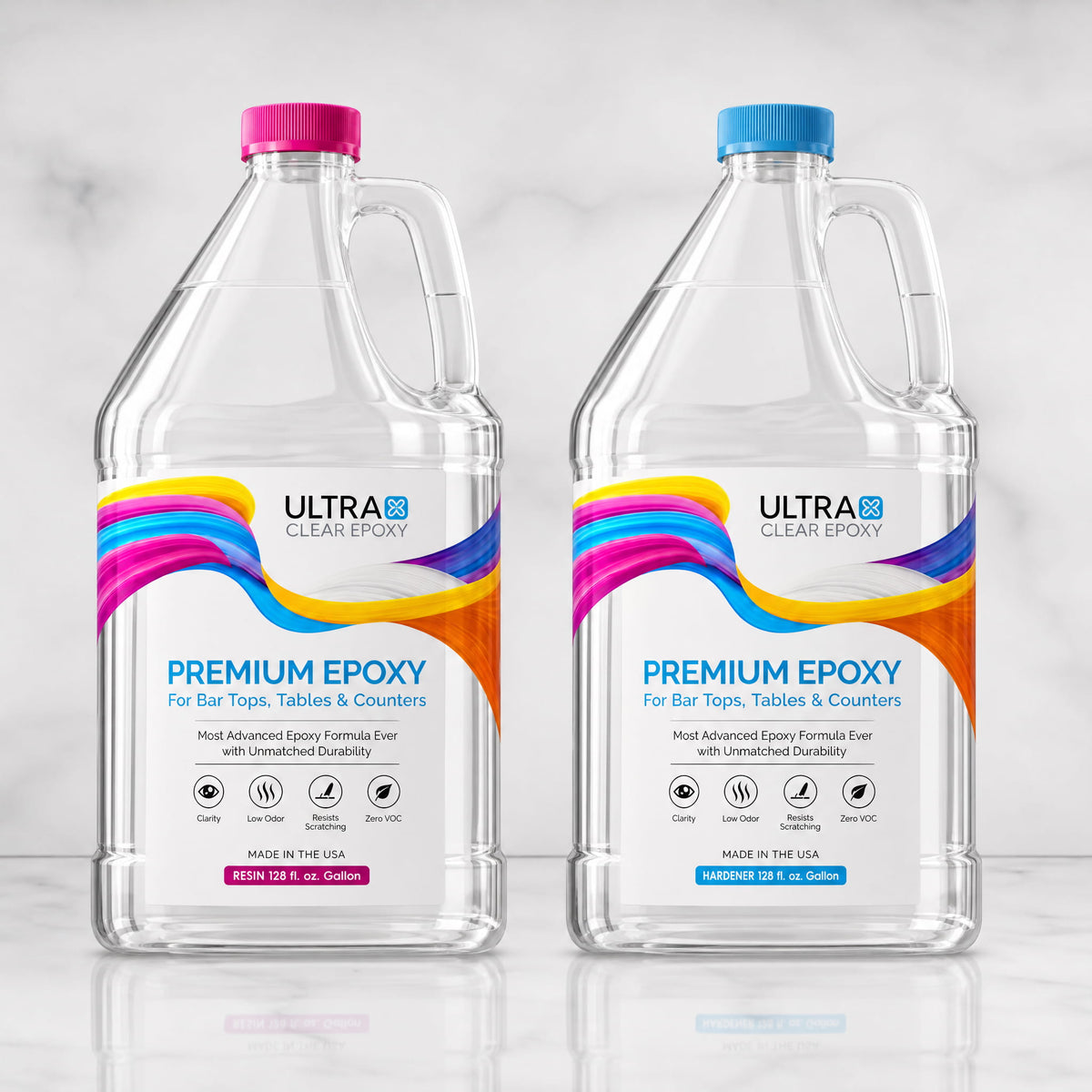
This is why products like UltraClear Bar & Table Top Epoxy are designed to be applied at an ideal flood-coat thickness of about 1/8 inch, striking the right balance between clarity, durability, and ease of application.
When the pour is too thick
On the other hand, overly thick pours can create the opposite problem. Too much epoxy at once can cause excess heat buildup, leading to bubbling, cracking, or yellowing as the resin cures unevenly.
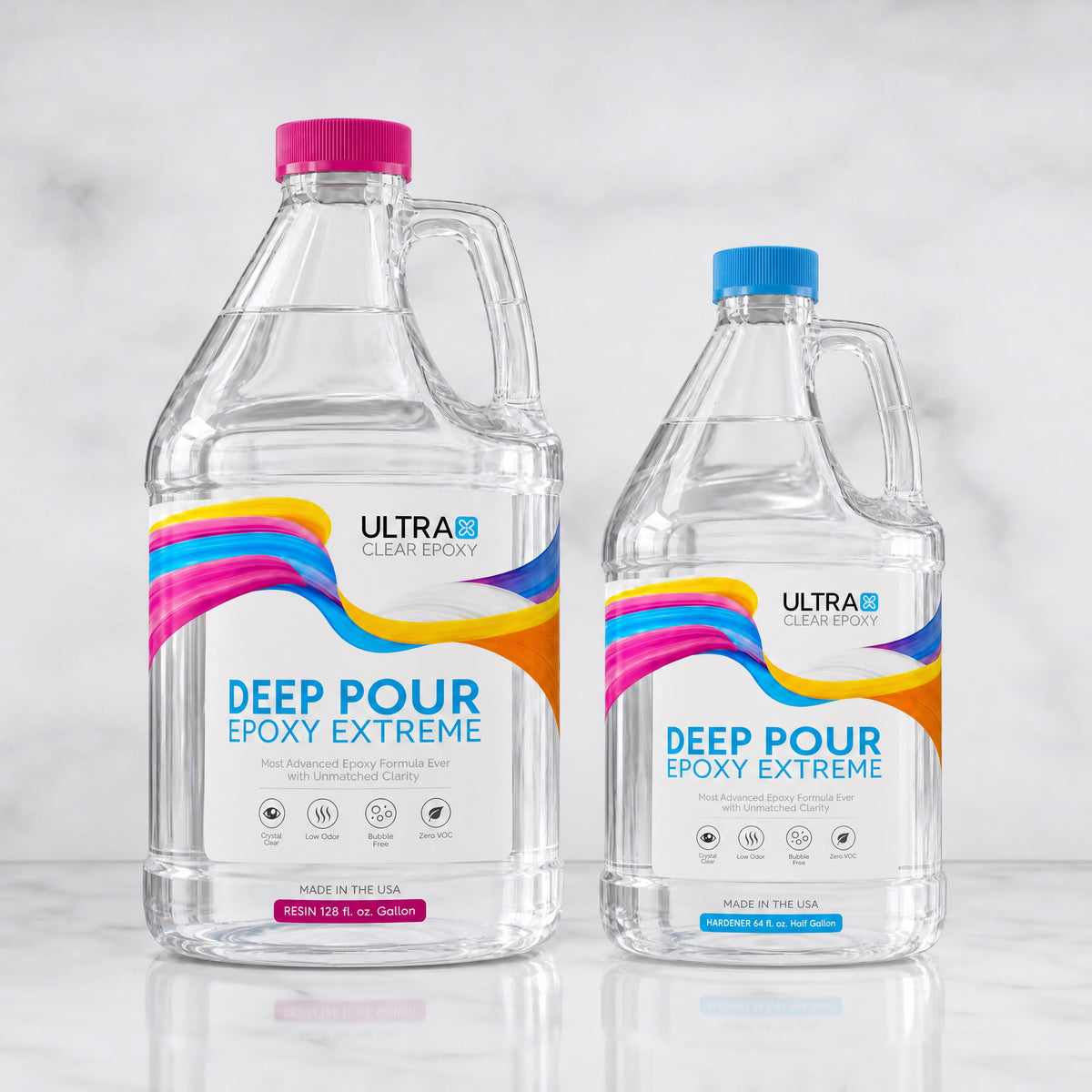
For projects like river tables or deep-set castings, specialized formulas such as UltraClear Deep Pour Epoxy are engineered to cure slowly and safely at greater depths, preventing the issues that standard epoxies would encounter in the same situation.
Get it right for beautiful, long-lasting results
Thickness also affects long-term performance. A correctly applied epoxy finish will resist stains, moisture, and impact far better than a layer that was poured improperly. Getting the thickness right ensures not only an attractive surface on day one but also one that holds up beautifully for years of use.


Table Top Epoxy vs. Deep Pour Epoxy
Not all epoxies are created equal. Different formulas are designed for different applications and pour depths:
| Feature | UltraClear Bar & Table Top Epoxy | UltraClear Deep Pour Epoxy |
|---|---|---|
| Best Pour Depth | Self-levels to 1/8" per layer. | Up to 2 inches per layer |
| Applications | Bar tops, table tops, counters, protective finishes | River tables, casting, embedding, large molds |
| Cure Speed | Faster cure for surface durability | Slow cure to prevent overheating in thick pours |
| Finish | Hardest possible surface with glasslike appearance | Crystal-clear, dimensional depth |
| Layering | Requires multiple thin coats for thicker builds | Fewer pours needed for large projects |
By using the correct epoxy type, you avoid common mistakes and ensure your project cures properly without compromising appearance or strength.
You'll find these epoxies in our store here:

Getting It Right: Tips for Pouring Safely
Even with the right epoxy, technique matters. Here are some key tips:
-
Respect the limits. Never exceed the maximum pour depth for the epoxy you’re using. For example, stick to thin coats with table top epoxy and use deep pour for thicker casting.
-
Layer when needed. If you want more depth with table top epoxy, apply multiple thin layers, letting each cure before adding the next.
-
Control your workspace. Epoxy performs best in a stable environment between 70–75°F with low humidity. Sudden temperature shifts can cause surface issues.
-
Accurate measuring is crucial. Always measure resin and hardener exactly as instructed, and mix thoroughly. Incorrect ratios can lead to soft or uncured spots.
-
Allow proper curing time. Rushing the process by pouring too thick too soon often causes problems. Patience delivers the clearest results.

The Value of Using UltraClear Epoxy
While technique is essential, the quality of the epoxy itself makes a major difference. Not all epoxies on the market are equal—especially when it comes to clarity, consistency, and durability.
Cheaper, imported epoxy brands often come with hidden risks:
-
Inconsistent quality control can result in batches that cure differently or fail altogether.
-
Weaker formulations may yellow quickly in sunlight or develop surface imperfections over time.
-
Health and safety concerns can arise from poorly tested formulas containing unsafe chemicals.
Even if you follow all the correct techniques, low-cost epoxy can sabotage your project. That’s why many professionals and DIYers alike choose UltraClear Epoxy.
-
UltraClear Bar & Table Top Epoxy delivers a strong, glossy, scratch-resistant surface perfect for everyday furniture. It's the gold standard and usually the right choice for finishing any surface.
-
UltraClear Deep Pour Epoxy allows for thick, crystal-clear pours without overheating, ideal for dramatic projects like river tables. Use this when you need an extra thick layer.
-
UltraClear Art & Craft Epoxy provides precision and clarity for smaller decorative pieces. It's most often used in resin art.
Made in the U.S.A. with rigorous quality standards, UltraClear Epoxy ensures consistent, reliable results every time—giving you peace of mind that your project will stay beautiful and durable for years to come.


FAQs: Epoxy Thickness Questions Answered
Can I pour table top epoxy thicker than 1/8 inch?
Not in a single layer. For thicker results, pour multiple thin coats. Each layer will self-level and bond with the next.
For advice on layering epoxy, see our guide here.
Why can’t I just use deep pour epoxy for everything?
Deep pour epoxy is formulated for slow curing in thick layers, but to achieve that there's a compromise on durability and viscosity. Because of this, it’s not well suited for thin coats on surfaces like table tops, where a faster-curing, more durable finish is needed.
For optimal results, use the type of epoxy that best fits yours project goals.
What happens if I pour too thick?
Excessive thickness can lead to overheating, bubbling, cracking, or incomplete curing. In some cases, the project may need to be completely redone.
Always follow the instructions provided by your chosen epoxy's manufacturer.
How do I know which UltraClear Epoxy to use?
-
Flat surfaces like tables, bars, and counters: UltraClear Bar & Table Top Epoxy
-
Deep river tables or casting projects: UltraClear Deep Pour Epoxy
-
Small, artistic projects or craft pieces: UltraClear Art & Craft Epoxy
If you're still not sure, contact us at UltraClear for expert assistance!
Can I layer deep pour epoxy like table top epoxy?
Yes, but it’s usually not necessary. Deep pour epoxy is designed for large volumes in fewer pours.
If layering, follow the manufacturer’s recommended timing for best bonding. UltraClear Deep Pour Epoxy can be poured in 2-inch layers, for a finish of up to 6 inches total without issue.

Finding the Perfect Pour Thickness for Long-Lasting Results
The thickness of your epoxy pour can make or break your project. Understanding the differences between table top epoxy and deep pour epoxy—and respecting their limits—ensures that your finish is clear, durable, and long-lasting.
By combining good technique with a premium epoxy like UltraClear, you’ll have results you can trust to look beautiful for years to come.

Have Questions? Want Advice? We're Here to Help!
If you have any questions about epoxy resin, or if you'd like assistance in planning an epoxy project, please reach out to us at UltraClear Epoxy—our epoxy experts are ready to assist!
You can contact us via phone or email here. During business hours, you can also text chat online with one of our resin specialists by clicking the Help button at the bottom of your screen.
In our online store, you'll find a variety of useful tools and supplies, ideal for resin projects, plus our award-winning UltraClear Bar & Table Top Epoxy and our UltraClear Deep Pour Epoxy.
UltraClear Epoxy—Trusted by over 1 Million+ Happy Customers