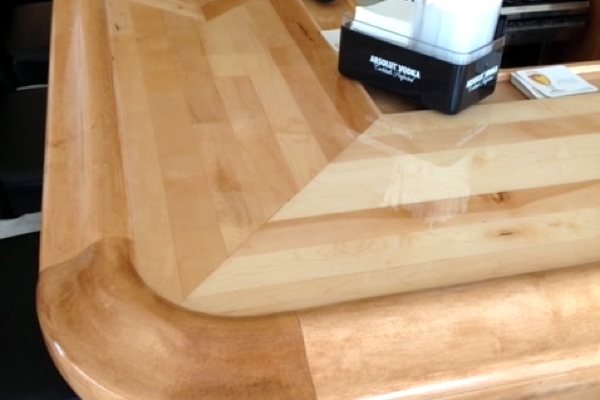
When creating an epoxy bar top, it's not immediately apparent how thick your finish should be, but getting it right plays a significant role in both how good it looks and how durable it ends up being.
Any level of thickness you choose will affect not only your bar's structural integrity but also the visual depth of your epoxy and overall performance. While a single thin layer may provide a sleek, glass-like finish, creating thicker layers leads to a more dramatic, dimensional look.
However, not all epoxy products are designed for the same thickness. In this article, we'll break down the ideal thickness for epoxy bar tops, discuss how to achieve it, and explain the best products and techniques for the job.

What Is the Ideal Thickness for Epoxy Bar Tops
Typically, our recommended thickness for a standard epoxy bar top is between 1/8 to 1/4 of an inch for the full surface coat. This is perfect for most bar top projects which involve a broad, flat surface.
However, deeper, more artistic designs (such as river bar tops or embedded items) are also feasible, but often require much greater thickness. The method you use to achieve the desired thickness depends on the epoxy type:
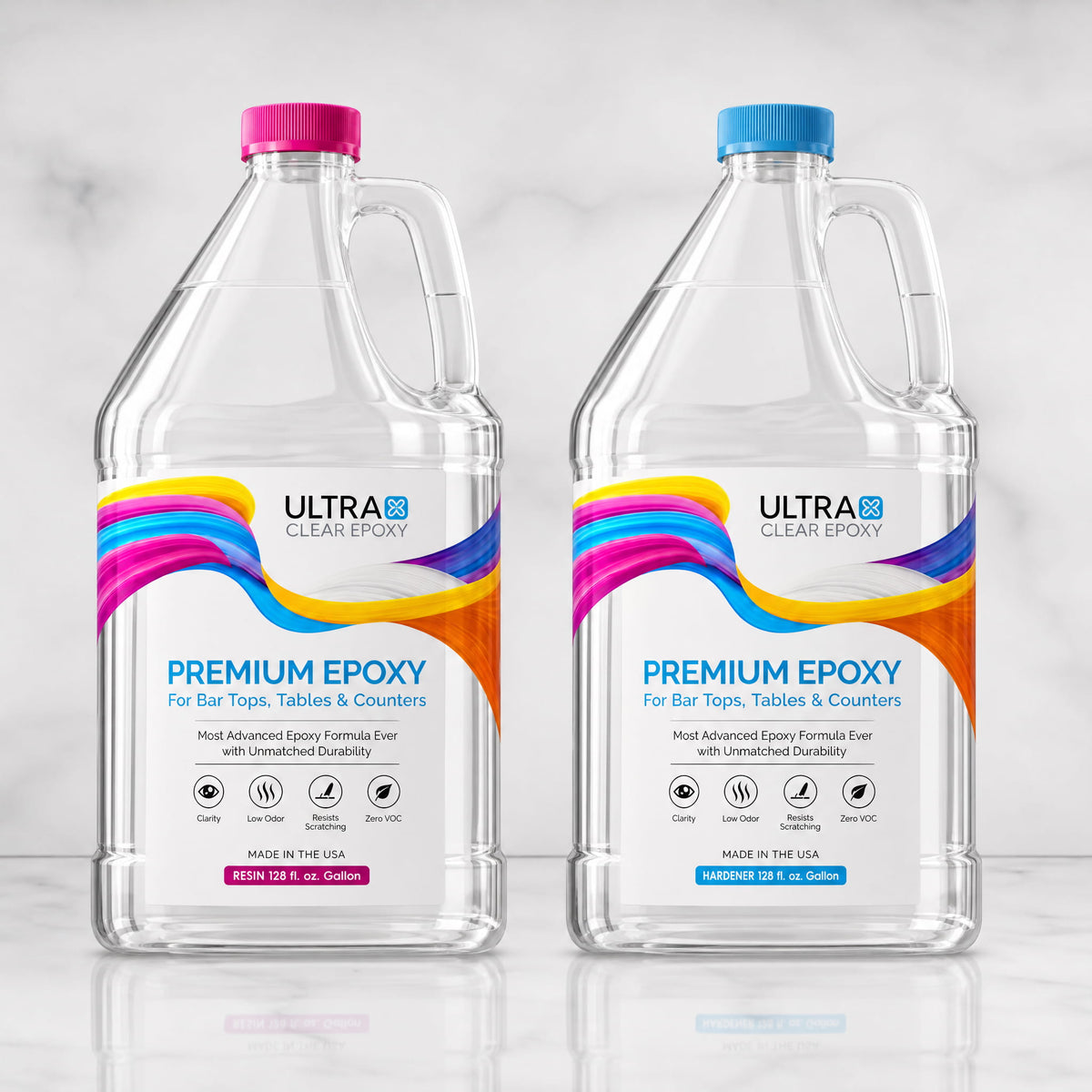
- For Clear, Protective Bar Tops: A final thickness of 1/8 inch provides enough durability to withstand regular use. This is usually achieved with UltraClear Bar & Table Top Epoxy, which is formulated for thin, self-leveling pours of up to 1/8 inch per layer.
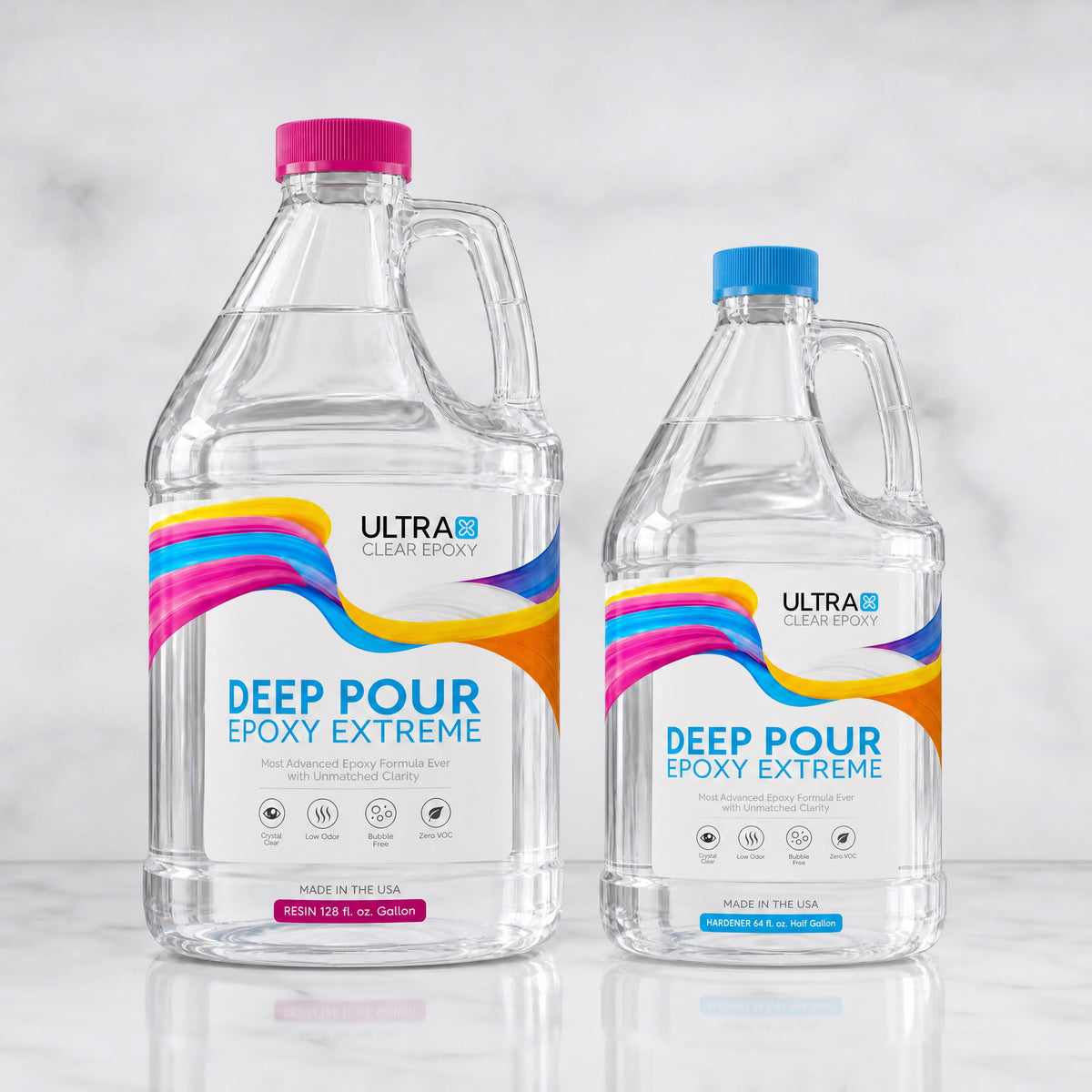
- For Deep-Pour Bar Tops: When creating designs with embedded objects, colored veins, or artistic effects, a thicker layer is required. In these cases, UltraClear Deep Pour Epoxy is the better option, as it can be poured up to 2 inches thick in a single layer.

Epoxy Types for Bar Tops and Their Layering Limitations
Having a sense of the limitations of epoxy resins will help you choose right for your project without issues such as overheating or incomplete curing.
UltraClear Bar & Table Top Epoxy
- Single-layer pour limit: 1/8 inch
- Best for: Standard bar top finishes, protective clear coats
- Method: When building thicker layers with this product, you'll need to apply multiple thin coats. Allow each layer to cure to a firm but tacky state (typically 4-6 hours between coats) to ensure proper bonding.
UltraClear Deep Pour Epoxy
- Single-layer pour limit: 2 inches
- Best for: Extra-thick pours; river bar tops; and embedment designs
- Method: For thick bar tops with greater depth, a deep pour epoxy allows you to achieve the necessary thickness in fewer—usually just one!—layers, minimizing the need for multiple applications.

How to Achieve Greater Thickness Using Only Table Top Epoxy
If you're using UltraClear Bar & Table Top Epoxy but want a bar top thicker than ¼ inch, you'll need to layer your pours. Here's how to do it effectively:
- First Pour: After your initial seal coat, apply the initial 1/8-inch layer and let it cure until it reaches a tacky, gel-like stage (approximately 4-6 hours).
- Second Pour: Mix and pour the next layer, allowing it to flow evenly over the first. The tacky surface ensures proper adhesion without sanding and allows a seamless finish.
- Additional Layers: Repeat the process until you reach the desired thickness. If you're waiting more than 10-12 hours between layers, lightly sand the cured surface to improve adhesion.
- Final Flood Coat: Once you achieve the thickness you want, apply a final flood coat for a smooth, glass-like finish.


Why Choose UltraClear Epoxy?
For bar tops that remain crystal clear and scratch-resistant over time, UltraClear Epoxy is the ideal choice, far surpassing low-cost epoxy budget brands.
The "Budget Brand" Epoxy Problem
High-quality epoxy is remarkable—strong, clear, resilient. Yet most epoxy out there falls within the category of "budget brand" epoxy.
Budget-brand epoxy is low-cost resin that is often produced overseas in regions with poor quality assurance or minimal safety regulations. This results in subpar epoxy products which are then imported to the U.S.
The epoxy is eventually sold to unsuspecting users, who may not even realize there's something wrong with it until after they've started—or even completed—their bar top project, leading to the stress of dealing with it, as well as wasted time, energy, and money.
Learn more in our article Why Your Epoxy Choice Matters: The Reality of Epoxy Safety and Quality.
UltraClear Epoxy— Trusted by over 1 Million+ Happy Customers
Our UltraClear Epoxy products are specifically formulated to resist yellowing, cracking, and fading, even with regular use. Their superior strength and crystal-clear clarity make them perfect for both residential and commercial bar tops.
Additionally:
- Made in the USA: All UltraClear Epoxy products are 100% manufactured in the USA, ensuring consistent quality and performance.
- Superior durability: UltraClear resins cure harder and more impact-resistant than many budget alternatives, making them ideal for high-traffic surfaces.
- Colorant-friendly: UltraClear Epoxy readily accepts pigments, dyes, and tints, making it easy to create customized, vibrant bar tops.

Epoxy vs. Traditional Finishes for Bar Tops
Epoxy offers several advantages over conventional bar top finishes, making it the go-to choice for durability and aesthetics.
Epoxy vs. Hardwax Oil
- Hardwax oil provides a matte, natural-looking finish but lacks the durability of epoxy. It's more easily damaged and requires regular reapplication to maintain a full moisture seal.
- Epoxy offers a thicker, glossier protective layer that resists stains, moisture, and scratches far better than wax-based finishes.
Epoxy vs. Polyurethane
- Polyurethane is a common finish for wood bar tops but is prone to scratching over time, along with a tendency to yellow. It cures to a smooth, flat surface similar to epoxy.
- Epoxy cures into a hard, glass-like surface that is significantly more resistant to abrasion and chemical exposure.
Epoxy vs. Lacquer
- Lacquer finishes are fast-drying and glossy but highly prone to chipping and cracking. Because it goes on very thin, it doesn't alter the surface texture (compared to the flat surface of epoxy). Regular reapplication is necessary to maintain the seal.
- Epoxy, on the other hand, provides a thicker, seamless coat that won’t peel or flake.


FAQ: Epoxy Bar Top Thickness
Question #1: Can I pour my entire bar top in one thick epoxy layer?
It depends on the epoxy you’re using. UltraClear Bar & Table Top Epoxy has a 1/8-inch per layer limit, requiring multiple coats for thicker bar tops.
However, UltraClear Deep Pour Epoxy can be poured up to 2 inches thick in a single layer, making it ideal for thicker, dimensional bar tops. When using it, though, we recommend a final topcoat of Bar Top Epoxy for maximum durability.
Question #2: What happens if I pour epoxy too thick?
If you exceed the recommended thickness per layer, the epoxy may overheat and cure improperly, resulting in bubbles, cracking, or cloudiness. For bar tops requiring greater thickness, we recommend using our Deep Pour Epoxy. You can also build up layers gradually, though it may take longer depending on how thick you want your coating to be.
Question #3: How thick should an epoxy bar top be for durability?
We recommend a thickness of 1/8 inch for standard bar tops. This is the depth that UltraClear Bar & Table Top Epoxy will self-level to, and it will provide a powerful, sturdy surface.
Sometimes, however—for heavy-use or commercial settings—a depth of 1/4 inch or more may provide superior strength and longevity.
Question #4: Do I need to seal the wood before pouring epoxy?>
Yes, sealing the wood with a thin epoxy coat is crucial. It prevents air and moisture from interfering with the main pour, improves adhesion, and helps create a smoother final surface.
Question #5: How do I prevent bubbles in a thick epoxy pour?
Use a heat gun or torch immediately after pouring to gently release trapped air bubbles. Stir the mixture slowly and avoid over-mixing to minimize air introduction. Multiple passes may be necessary for thicker layers.
For more detailed explanations, see our article Do you need a heat gun for resin?.
Question #6: What is the recommended curing time for an epoxy bar top finish?
Curing times vary depending on the product and environmental conditions. Generally, UltraClear Bar & Table Top Epoxy cures within about 72 hours for a thin layer, while thicker pours using UltraClear Deep Pour Epoxy may take several days to fully harden.
Question #7: How do I clean and maintain my epoxy bar top after curing?
Clean the surface with a soft, damp cloth and mild detergent. Avoid abrasive cleaners or tools that might scratch the finish. Regular cleaning helps maintain the high-gloss, clear appearance of your epoxy bar top.
See our epoxy cleaning guide for more methods.
Question #8: Can I repair minor scratches or damages on my epoxy bar top?
Yes, minor scratches can often be repaired by lightly sanding the affected area with fine-grit sandpaper and applying a new thin coat of epoxy. For deeper damage, you may need to remove the affected section and reapply epoxy following proper surface preparation.
For more info, see our guide How to Repair and Restore Damaged Epoxy Surfaces.

Epoxy Bar Top Finish Thickness: Our Final Thoughts
The ideal thickness for your epoxy bar top depends on your design goals and the resin type you’re using. For standard bar tops, 1/8 inch offers a sleek, protective finish, while creative projects with embedded objects or deep veins require thicker layers achievable with UltraClear Deep Pour Epoxy.
By selecting the right epoxy for your project and applying it properly, you can create a long-lasting, professional-grade bar top with stunning clarity and durability.
Have Questions? Want Advice? We're Here to Help!
If you have any questions about epoxy resin, or if you'd like assistance in planning an epoxy project, please reach out to us at UltraClear Epoxy—our epoxy experts are ready to assist!
You can contact us via phone or email here. During business hours, you can also text chat online with one of our resin specialists by clicking the Help button at the bottom of your screen.
In our online store, you'll find a variety of useful tools and supplies, ideal for resin projects, plus our award-winning UltraClear Bar & Table Top Epoxy and our UltraClear Deep Pour Epoxy.