Some epoxy projects still look like they belong years after they're finished. Others never quite feel at home, even when the craftsmanship is excellent. More often than not, the difference isn't the epoxy itself—it's the decisions that were made before the first pour.
Chances are, you already know which table, countertop, bar top, or other functional surface you want to build or refinish. This article assumes you've reached that point and are ready to decide how the finished piece should look, function, and fit into the space around it. If you're still exploring what's possible with epoxy, it's worth browsing a few project ideas first, then returning once you have a direction in mind.
From there, the focus shifts from pouring epoxy to planning with purpose. The sections ahead explore the design decisions that shape how a finished surface looks, feels, and functions—helping you create something that still feels right years after the project is complete.
Deciding What Success Looks Like
Every successful epoxy project solves a problem.
Often, it's a practical concern, like protecting a well-loved dining table or refreshing a worn countertop. Sometimes, it's about altering how a space feels, such as by turning an ordinary bar top into a natural gathering place or making a handcrafted table the centerpiece of a room. The epoxy may be the finishing touch, but it's not the only reason the project succeeds.
In fact, the first decision has nothing to do with wood species, pigments, or edge profiles. Before any of those choices come into focus, it's worth deciding what success actually looks like for your project.

For instance, a surface that's meant to preserve family memories should be planned differently from one designed to catch customers' attention.
Before moving on, take a moment to answer a few simple questions:
• What do I want this project to accomplish?
• Who will spend the most time using or seeing this surface?
• What should people notice first when they walk into the room?
• Am I creating something new or giving an existing piece a second life?
Once you know what you're trying to accomplish, the process—choosing materials, refining the design, and deciding how bold/subtle you want your finished piece to be—become personal and deliberate.
Design for the Space, Not Just the Surface
A finished epoxy surface doesn't exist on its own. It becomes part of a room or outdoor space that already has its own materials, lighting, furniture, and personality.
When those elements work together, the project will feel like it has always belonged there. Without doing that, even excellent craftsmanship can feel unexpectedly out of place.
Before moving forward, think about the room or space where the finished project will live:
- What naturally draws your attention when you enter the room?
- How will people interact with this surface every day?
- Should it become a focal point, or quietly support everything around it?
- What kind of atmosphere do I want this room to have?
Your answers will make every decision that follows easier.
Should It Stand Out or Blend In?
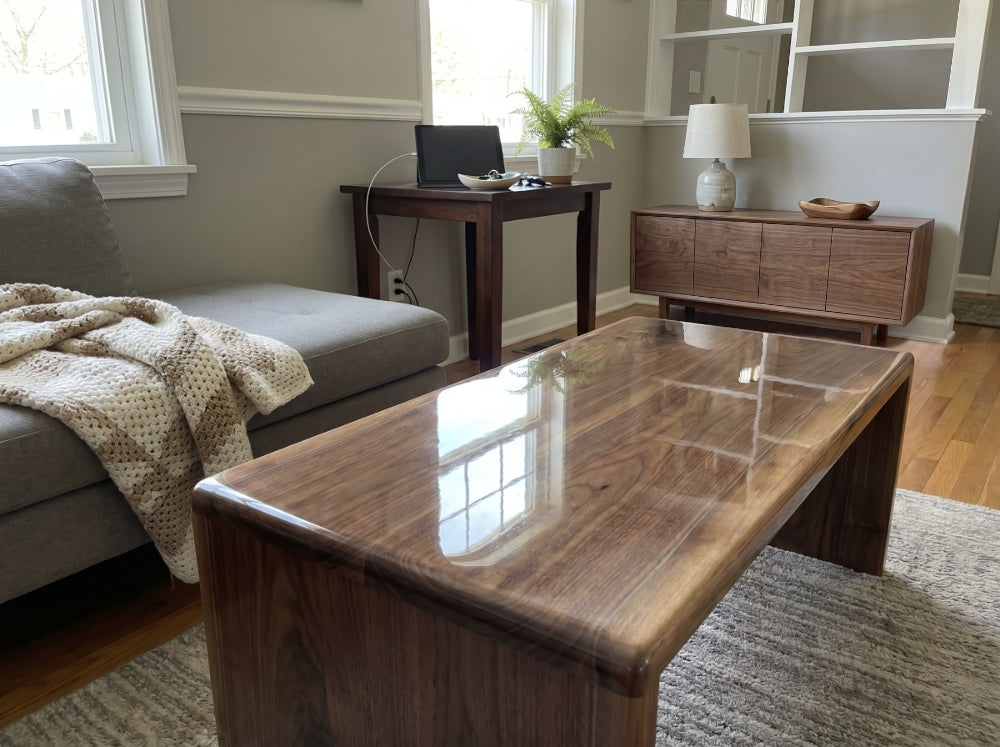
Imagine a living room with warm wood furniture, soft lighting, and understated finishes. A dramatic coffee table might become a striking centerpiece, but it could also overwhelm the calm atmosphere the room already creates.
On the other hand, a simple clear finish that celebrates the wood’s natural character may strengthen the sense of warmth without demanding attention.

Although the room never changes, the coffee table changes how the space is experienced. A natural wood surface quietly complements the décor, while increasingly distinctive designs draw more attention and gradually become part of the room’s identity.
There isn’t a universally correct choice. The best design is the one that supports the atmosphere you want to create and the role you want your finished piece to play.
The same principle applies in commercial spaces, too. A neighborhood coffee shop, an upscale restaurant, and a hotel lobby may all incorporate epoxy, yet each asks the finished surface to play a different role.
Sometimes it’s meant to welcome visitors quietly. Other times it’s designed to leave a lasting first impression. Deciding which role your project should play makes every design choice afterward more consistent.
As you continue planning, keep the room itself in mind. A beautiful surface can certainly draw attention. The more important question is whether it draws the right kind of attention for the room it’s in.
Most people won’t remember every detail of a table or countertop, but they’ll remember how the room made them feel.
Natural Beauty or Signature Piece?
After deciding how visually prominent your project should be, choosing a design direction becomes much easier. Some projects celebrate the wood itself, while others use epoxy as an essential part of the design.
Each approach gives the finished piece a different character. The better choice depends on the impression you want it to leave.

Let the Wood Speak
Some pieces already have everything they need before the epoxy is ever mixed. Beautiful hardwoods often need very little embellishment. Figured walnut, spalted maple, cherry, and many other species already possess the character that draws people in. A live-edge dining table, a walnut executive desk, or a handcrafted bar top often benefits from this restrained approach because the material itself provides much of the visual interest.
A crystal-clear flood coat protects the surface while adding depth, contrast, and visual richness to the grain itself. Instead of becoming the center of attention, the epoxy simply brings out what was already there.
This approach tends to age especially well. As surrounding décor changes over the years, a natural wood surface often continues to fit naturally because it isn't relying on a particular trend or color palette to make an impression.
When the Design Becomes the Feature
Other projects invite the epoxy to play a more prominent role. River tables, decorative inlays, stained-glass designs, and other artistic approaches naturally draw the eye and give the finished piece a stronger personality.
That can be exactly the right decision. A restaurant may want guests to remember the bar they gathered around. A homeowner may want a coffee table that sparks conversation long after guests have sat down.
A coffee table in a living room, a statement bar top, or a reception desk can all benefit from a more expressive design when the goal is to create a memorable focal point.
The more expressive the design becomes, the more carefully it should be considered. Trends come and go, but a thoughtfully planned piece should still feel at home years from now.
Choosing Between Them
Some projects become favorites because of their restraint. Others become favorites because no one has ever seen another table quite like them.
The goal isn't to imitate a trend or impress other people. It's to build something you'll still be happy to live with years from now.
With your design direction established, the next step is choosing the materials that will bring it to life.
Choosing Materials That Support the Design
By now, you should have a fairly clear picture of what you want your finished project to become. The remaining decisions are less about choosing attractive materials and more about choosing materials that work well together.
Beautiful materials don’t automatically create beautiful projects. Wood, epoxy, and surrounding finishes need to work together, or even an impressive design can feel disconnected from the space around it.
Let the Wood Guide the Design
The wood often establishes the personality of the project before the epoxy is ever poured. Rich walnut creates a different impression than bright maple or white oak, while heavily figured or spalted lumber naturally attracts more attention than straighter, more uniform grain.
Rather than asking which wood is "best," ask which one best supports the atmosphere you're trying to create. Sometimes dramatic grain deserves a simple clear finish. Other times, quieter wood provides the perfect foundation for a more expressive epoxy design.
Let the Epoxy Complement the Wood
Once the wood establishes the foundation, the epoxy should reinforce that direction instead of overshadowing it. Clear flood coats emphasize natural character, while pigments, metallic effects, rivers, and artistic designs gradually shift more attention toward the epoxy itself.
The most successful projects simply find the balance that suits the overall vision.
The Small Decisions Matter
Many projects are remembered for the details people don't immediately notice. A softly rounded edge feels different from a sharp square profile. The thickness of the tabletop changes how substantial it appears. Even the clarity and depth of the finish influence whether the surface feels handcrafted or factory-made.

None of these choices usually become the focal point on their own. Together, however, they shape how the finished piece is experienced every day.
When the materials support one another instead of competing for attention, the finished project begins to feel complete long before it's put into service.
Good design also has to stand up to everyday use.
Design for the Years Ahead
Every epoxy project eventually becomes part of someone's routine.
A dining table hosts family meals. A coffee table collects books, drinks, and board games. A restaurant bar top serves hundreds of customers every week. Long after the excitement of building the project has passed, the finished surface simply becomes part of everyday life.
That's why it's worth thinking beyond how the project will look on the day it's finished. Consider how it will be used a year from now—or ten years from now. Will it receive constant sunlight? Heavy daily use? Will children, pets, rearranged furniture, or frequent guests affect how the surface is used?
The most successful projects continues to suit their environment, even as the room around them changes. When planning your project, think about how it will fit into your life as it changes. Rooms are redecorated. Families grow. Businesses evolve.
A design that still feels at home through those changes is far more likely to become a lasting favorite than one built around a passing trend.
From Planning to Pouring
The best epoxy projects are not always the boldest, most expensive, or most complicated. They are the ones where the purpose, room, materials, and daily use were considered together before the first pour.
Projects that continue looking like they belong years later rarely get there by accident. They’re the result of thoughtful decisions made long before the epoxy is mixed. When the room, the materials, and the purpose all support one another, the finished piece has a much better chance of becoming something you’ll enjoy living with for years.
When you’re ready to move from planning to building, UltraClear Epoxy has professional-grade options for clear flood coats, deep pours, and artistic resin work—so you can choose the product that matches the project you’ve planned.