Epoxy resin is one of the most versatile materials for countertops, table tops, art projects, and custom furniture; it's strong, crystal clear, and highly customizable. Yet despite its popularity, many myths and misconceptions still surround epoxy use.
In this article, we’ll set the record straight on some of the most common epoxy myths—helping you better understand what epoxy can (and can’t) do, and why choosing the right product makes all the difference.
Contents(Click any link to jump to that section) |
|
6 Persistent Myths About Epoxy
FAQs: Clearing Up More Epoxy Misconceptions |

6 Persistent Myths About Epoxy
Many of the misconceptions about epoxy come from outdated information, while others are based on limited experiences or the use of lower-quality products. Let’s break down the most common myths and see how epoxy really performs.
Myth #1: “Epoxy Always Yellows Over Time”
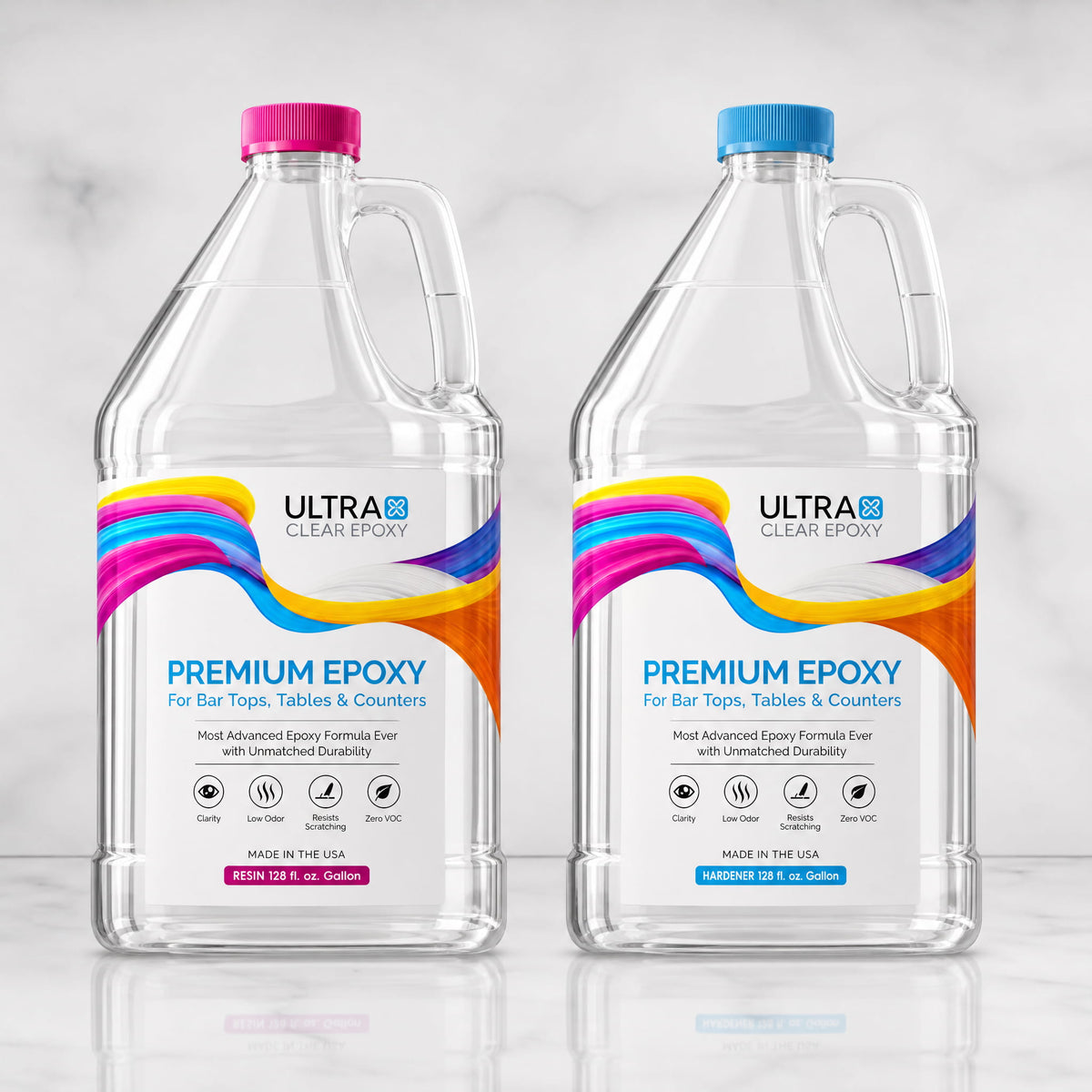
While it’s true that early formulations of epoxy were prone to yellowing with age and UV exposure, modern high-quality resins are engineered to resist discoloration. High-grade epoxy products like our UltraClear Bar & Table Top Epoxy use advanced UV inhibitors that slow down yellowing significantly, keeping finishes beautifully clear for years.
Budget epoxies, on the other hand, often lack these stabilizers and can show yellowing within months—especially if exposed to direct sunlight. That’s why UV protection is a critical feature to look for if your project will be in a bright or partially outdoor environment.
Myth #2: “Epoxy Isn’t Safe for Food Surfaces”
This is a persistent misconception, but the truth depends entirely on the formulation. Many industrial epoxies were not intended for food-contact surfaces, so concerns about safety are valid in those cases. However, food-safe epoxies such as UltraClear Bar & Table Top Epoxy—are rigorously tested and meet FDA requirements for contact with food once fully cured. In fact, epoxy is even used in as an interior lining to help preserve bulk canned foods.
This means epoxy-coated surfaces like dining tables, kitchen counters, or serving trays can be completely safe for everyday use, provided you’re using a certified product and allowing it to cure fully before use.
Learn more about epoxy being a food-safe surface here.
Myth #3: “Epoxy Isn’t Durable Enough for Countertops”
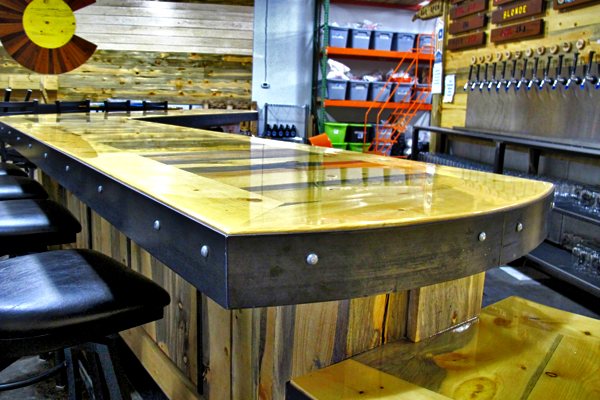
Some believe that epoxy can’t stand up to the wear and tear of kitchens, bars, or restaurants. In reality, properly applied epoxy is highly durable, resisting scratches, stains, and impact better than many sealants or finishes.
Where this myth comes from is usually poor application technique or the use of cheaper epoxies that cure too soft. Premium options like UltraClear Bar & Table Top Epoxy cure to a strong, glass-like surface that can handle daily use and is much easier to clean than many natural stone or wood surfaces.
Click here for more information on how epoxy compares to other countertop materials.
Myth #4: “Epoxy Is Hard to Work With”
At first glance, epoxy might seem intimidating—mixing ratios, working times, bubbles, and curing can all feel overwhelming. But in practice, epoxy is beginner-friendly if you follow the instructions carefully. Most issues, such as bubbles or uneven curing, are easily preventable with the right preparation.
For instance, using a seal coat before a flood coat, mixing thoroughly but not too aggressively, and pouring in the recommended thickness can eliminate most common mistakes. With a bit of patience, even first-time users can achieve professional results.
Myth #5: “Epoxy Is Only for Countertops and Tables”
Epoxy’s versatility goes far beyond flat surfaces. From river tables to jewelry, wall art, bar tops, coasters, flooring, and even creative projects like embedding keepsakes or creating ocean effects, epoxy is one of the most flexible materials available to DIYers and professionals alike.
Different epoxy formulations are optimized for different uses:
-
UltraClear Bar & Table Top Epoxy – For countertops, bar tops, and table tops.
-
UltraClear Deep Pour Epoxy – For river tables, molds, or thick castings.
-
UltraClear Art & Craft Epoxy – For smaller projects, decorative pieces, and resin art.
Once you understand which type to use, epoxy opens the door to a wide range of creative applications.
Myth #6: “All Epoxies Are the Same”
This may be the most harmful myth of all. Epoxies vary widely in quality, safety, clarity, and durability. Many imported, budget-grade epoxies suffer from inconsistent curing, yellowing, strong odors, or soft finishes that scratch easily.
Premium U.S.-made epoxies like UltraClear are manufactured under strict quality control, ensuring consistent results with every pour. That difference in reliability is what separates a frustrating project from one that lasts for years.

Why Epoxy Myths Spread
Epoxy misconceptions don’t appear out of thin air—they stem from real experiences, whether it’s a DIY mistake or the use of poor-quality products. Misapplication can make even the best epoxy look unreliable, while low-grade formulations may create problems that reinforce negative assumptions.
To better understand where these myths come from, it helps to look at two common sources: mistakes during application and the shortcomings of subpar products.

Common Mistakes That Fuel the Myths
Like most myths, the misconceptions about epoxy often have a kernel of truth behind them. The problem is that these issues usually stem from how the epoxy is chosen, mixed, or applied—not from the epoxy itself. Here are a few common mistakes that feed into the biggest myths:
Mistake #1: Improper mixing and measuring.
One of the most common errors is failing to accurately measure or thoroughly mix the resin and hardener. When the ratio is off, or the two components aren’t blended properly, the result can be soft spots, tacky surfaces, or poor curing.
This has led to the myth that “epoxy is weak” or “it rarely fully hardens,” when in reality, correctly mixed epoxy cures into an incredibly strong, durable surface.
Mistake #2: Using the wrong epoxy for the job.
Not all epoxies are created for the same purpose. Art epoxy, for instance, isn’t designed for extra-thick pours or heavy-use surfaces, yet it’s sometimes used on bar tops or counters. If the finish fails under heat or wear, people assume epoxy as a whole is to blame.
Choosing a purpose-built formula—such as UltraClear Bar & Table Top Epoxy for flat surfaces or UltraClear Deep Pour Epoxy for thick castings—ensures performance matches the project.
Mistake #3: Ignoring UV protection.
Another common mistake is applying epoxy outdoors without a proper UV-resistant formula or without adequate shade/covering. Standard epoxies can discolor when exposed to direct sunlight for extended periods, which fuels the belief that “epoxy always yellows.”
In truth, UV inhibitors built into high-quality products, combined with sensible placement, prevent this issue and enable an epoxy finish to last for many years in peak condition.
Mistake #4: Skipping surface preparation.
Dust, oils, or unsealed porous materials can interfere with bonding. A poorly prepared surface might lead to bubbles, peeling, or dull spots. These failures reinforce the myth that epoxy is “unreliable.” In reality, a properly sealed and prepped surface creates a flawless, long-lasting bond.
More information on setting up an ideal epoxy workspace can be found here.
By recognizing these mistakes for what they are—misapplications rather than flaws in the material—you can see how the myths spread. Epoxy’s reputation suffers not because it can’t perform, but because it wasn’t always used under the right conditions. With the right product and proper technique, these myths quickly fall apart.

When the Myths Have Some Truth
While many epoxy myths are exaggerated or caused by mistakes in use, some do have a sliver of truth—especially when poor-quality materials are involved. Here are a few situations where the myths can feel real:
#1: Yellowing with low-grade epoxies.
Cheap epoxy products, particularly those manufactured overseas with little quality control, often lack adequate UV protection. When exposed to light, they can yellow rapidly, sometimes within months. This gives weight to the myth that all epoxy yellows, when in reality, premium products with advanced UV inhibitors stay crystal clear far longer.
#2: Food safety concerns with untested products.
Epoxy is often criticized as “unsafe for food contact.” In truth, once properly cured, a high-quality epoxy like UltraClear Bar & Table Top Epoxy is non-toxic and food safe.
The FDA doesn't require testing for food safety in epoxy, instead leaving it up to the manufacturer. The problem is that not all manufacturers test their products to meet FDA standards. Unverified, budget-brand epoxies might leave users uncertain about what’s leaching into their surfaces, which makes the myth harder to dismiss outright.
#3: Durability issues with budget brands.
Epoxy’s reputation for being “scratch-prone” or “too delicate” can be traced back to formulations that cut corners. Low-cost resins may cure softer, leaving them more vulnerable to daily wear.
Over time, this reinforces the idea that epoxy isn’t durable, when in reality, a properly formulated epoxy finish provides one of the toughest protective coats available.
#4: Long cure times in the wrong environment.
The myth that “epoxy takes forever to cure” sometimes comes true when users choose products unsuited for their conditions. For instance, a deep-pour epoxy used in a thin layer may stay tacky for days, or a budget epoxy may never cure fully in cooler rooms. It's important to provide the right curing conditions for any epoxy you use.
Quality epoxies are engineered for predictable results when used correctly, but not all brands deliver consistency.
Each of these examples shows how myths often have roots in real-world frustrations. The key difference lies in whether you’re working with a high-quality, carefully tested epoxy—or one that leaves results up to chance. Choosing a trusted product eliminates the conditions that make these myths feel true.

FAQs: Clearing Up More Epoxy Misconceptions
Can epoxy be used outdoors without issues?
Epoxy can be used outdoors, but not all formulas are designed to withstand UV exposure and temperature swings. Over time, direct sunlight and weather can damage low-grade epoxies.
For best results outdoors, stick to shaded or covered areas, and always choose a high-quality product with UV inhibitors such as UltraClear Bar & Table Top Epoxy.
Other things you can do include providing shade or shelter from direct sunlight and applying a UV-resistant urethane topcoat to your epoxy finish.
Is epoxy resistant to heat from hot pans or mugs?
Not entirely. While cured epoxy is tough, it is still a type of plastic and can soften or scorch when exposed to extreme heat. Directly placing hot cookware or pans on epoxy is not recommended. Use trivets or heat pads to preserve the finish.
Will epoxy crack as it ages?
When applied correctly, epoxy does not become brittle with age. Cracks usually occur due to poor application—such as pouring too thick in one layer—or when using a subpar resin that cures unevenly.
High-quality epoxies like UltraClear are designed to resist shrinkage and maintain structural integrity for years.
Is epoxy safe once cured?
Yes. While uncured resin and hardener can be irritating to skin and should be handled with gloves, fully cured epoxy is inert and non-toxic. Food-safe epoxies, such as UltraClear Bar & Table Top Epoxy, are specifically tested to ensure safe use with food contact once curing is complete.
Does epoxy always need sanding or polishing after curing?
Not always. A properly poured and leveled epoxy finish cures to a naturally glossy, glass-like surface without additional finishing.
However, if dust, bubbles, or imperfections appear during curing, light sanding and polishing can restore clarity and smoothness.
Can epoxy be repaired if it gets scratched or damaged?
Yes. Minor scratches can often be buffed or polished out.
For deeper damage, sanding the area and applying a fresh seal coat of epoxy usually restores the surface to like-new condition.
See our guide to epoxy repairs for information on this and many other issues.
Why does cheaper epoxy sometimes smell so strong?
Strong chemical odors often indicate low-quality manufacturing or lack of refinement in the resin. These epoxies may also release more volatile organic compounds (VOCs) during curing, raising health concerns.
UltraClear products are low-odor, low-VOC, and made under strict quality standards to ensure safety and comfort during use.

The Unvarnished Facts About Epoxy
Epoxy resin is a powerful material when you separate the facts from the myths. It’s safe, durable, versatile, and beautiful when you use the right formula and apply it properly.
Misinformation often comes from outdated experiences or the use of low-quality products—but with a premium epoxy like UltraClear, you can achieve strong, crystal-clear results that stand the test of time
You'll find our high-grade UltraClear Epoxy products on the following pages:
- UltraClear Bar & Table Top Epoxy—The classic. A thin, super-strong coating that can be applied to bar tops, table tops, countertops, and more.
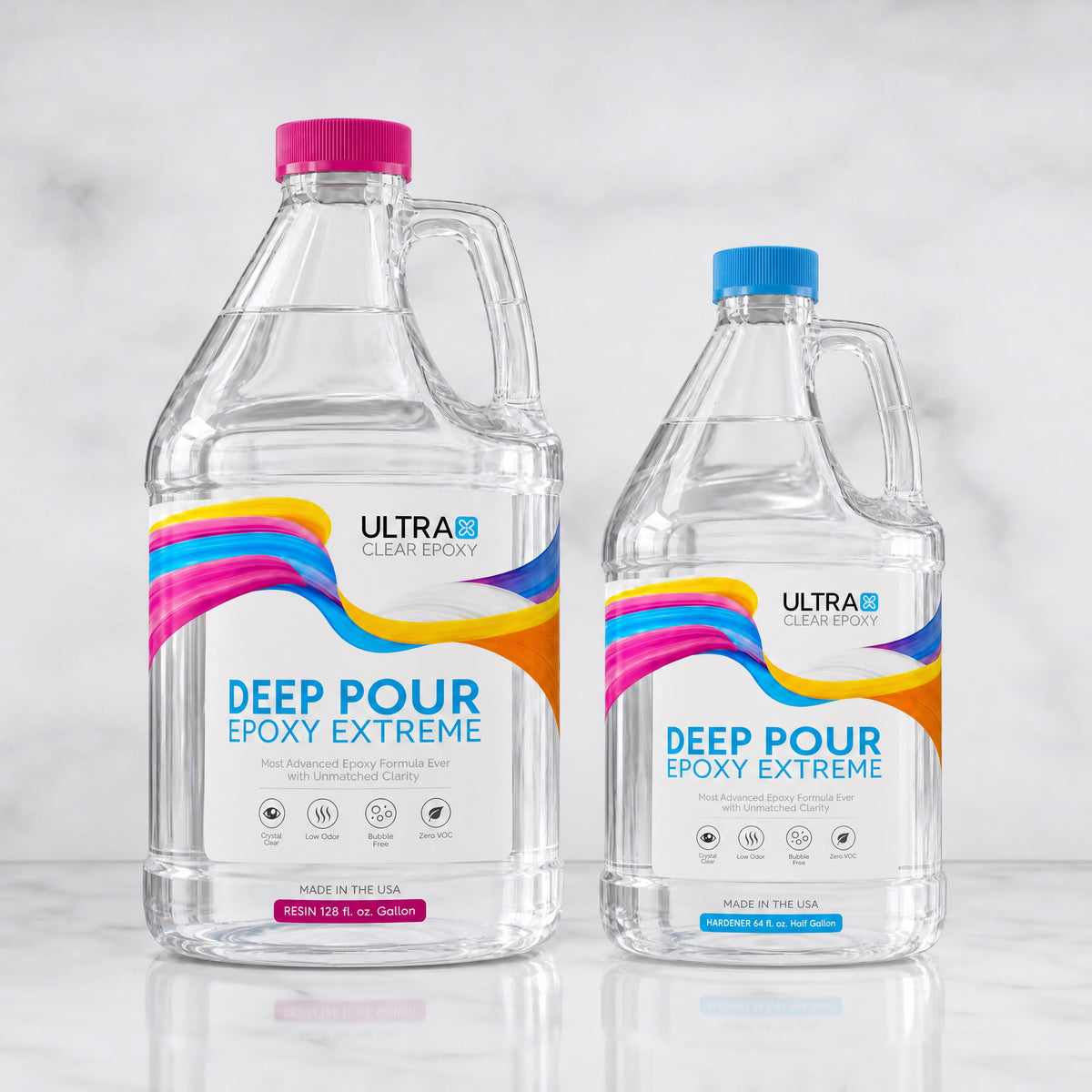
- UltraClear Deep Pour Epoxy—Our deep casting resin. Use this when you need an extra-thick layer of epoxy, such as for the river vein of a river table.
- UltraClear Art & Craft Epoxy—Our specialty craft epoxy designed for smaller, more intricate projects. This is the ideal for when you need a flexible epoxy that still cures strong and clear and can be manipulated easily to create unique effects.

Have Questions? Want Advice? We're Here to Help!
If you have any questions about epoxy resin, or if you'd like assistance in planning an epoxy project, please reach out to us at UltraClear Epoxy—our epoxy experts are ready to assist!
You can contact us via phone or email here. During business hours, you can also text chat online with one of our resin specialists by clicking the Help button at the bottom of your screen.
In our online store, you'll find a variety of useful tools and supplies, ideal for resin projects, plus our award-winning UltraClear Bar & Table Top Epoxy and our UltraClear Deep Pour Epoxy.
UltraClear Epoxy—Trusted by over 1 Million+ Happy Customers