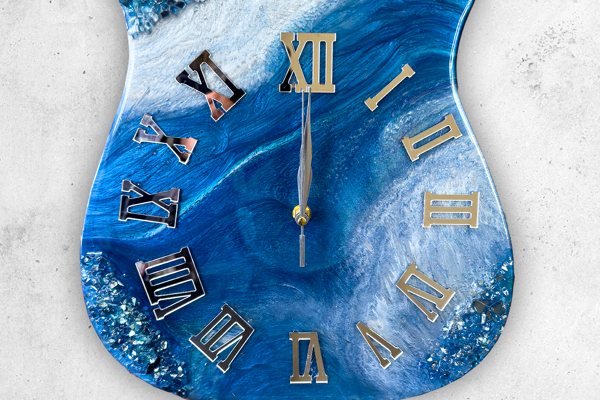
Making an epoxy wall clock is a great way to turn your artistic expression into something also functional, offering a unique way to display both time and creativity. Whether you’re a beginner or an experienced crafter, epoxy resin can be used to create striking wall clocks that enhance your home décor.
In this guide, we:
- Consider some of the possible esthetic choices for this project
- Discuss crafting techniques for varying skill levels
- Provide a detailed step-by-step process for making a simple resin wall clock.
We also discuss the benefits of epoxy as a finish over traditional options, recommend UltraClear Epoxy for superior quality, and answer common questions about the process.

Aesthetic Choices and Techniques
Epoxy wall clocks can be as simple or elaborate as you desire. The design options vary based on your skill level and creative goals:
-
Basic Designs: For beginners, a minimalist design using a single-color resin or a simple gradient is a great start. You can create a uniform, glossy surface that acts as a canvas for a clock mechanism.
-
Intermediate Techniques: As you gain confidence, experiment with tinted resins or add subtle pigments to create color variations. Techniques such as gentle swirling or the careful placement of decorative elements (like small flakes, beads, or pressed leaves) can add visual interest without overwhelming the design.
-
Advanced Concepts: Experienced artists may opt for multi-layered designs, embedding objects, or incorporating a mix of both opaque and translucent colorants. Advanced techniques might include creating a faux depth effect with resin that appears to have a three-dimensional quality, or even integrating lighting elements for an extra dynamic touch.
The choices you make in terms of color, texture, and embedded elements will determine the overall aesthetic of your wall clock, making it a personalized statement piece.

Step-by-Step Guide for Making a Simple Resin Wall Clock
Follow these detailed steps to create your own epoxy wall clock:
Step #1: Design and Material Preparation:
- Plan Your Design: Sketch a layout for your wall clock. Decide if you want a simple, clear finish or a colored design with embedded elements.
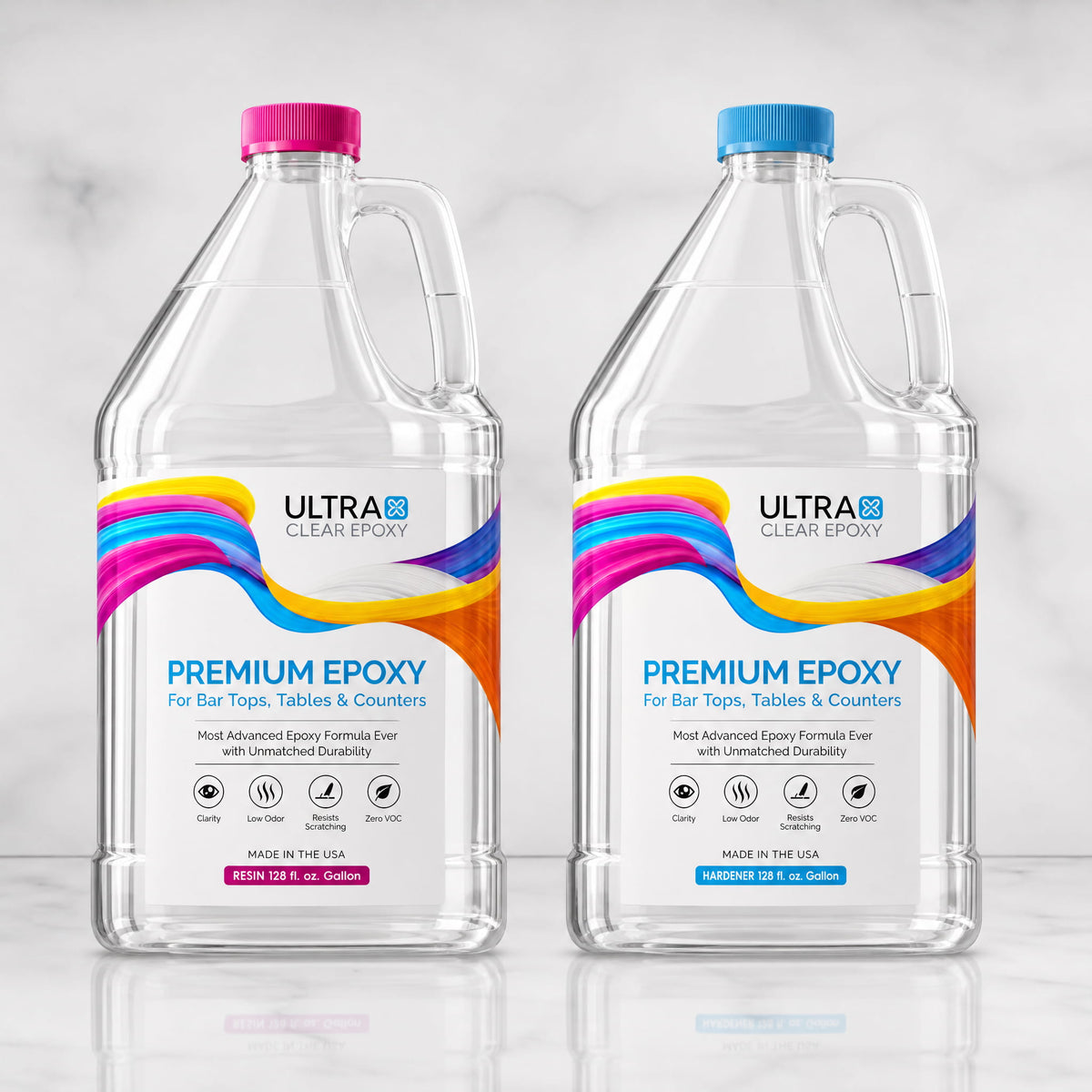
- Gather Materials: You will need a clock mechanism, a suitable substrate (such as a wooden board or acrylic panel), mixing cups, stir sticks (or a power drill with a mixing bit for larger batches), and a level workspace. For a smooth, protective coating on flat surfaces, UltraClear Bar & Table Top Epoxy is recommended.
Step #2: Surface Preparation:
- Clean the Substrate: Ensure the board or panel is free from dust, grease, or any contaminants. Use a lint-free cloth with isopropyl alcohol to clean the surface.
- Secure the Clock Base: If using wood, sand the surface lightly to promote better adhesion. Use painter’s tape along the edges if you wish to contain the resin within a specific boundary.
Step #3: Mixing the Epoxy Resin:
- Accurate Measurement: Follow the manufacturer's instructions carefully for the resin-to-hardener ratio (commonly 1:1 or 2:1). Use graduated cups for precision.
- Thorough Mixing: Stir the components slowly and methodically for 3-5 minutes, scraping the sides and bottom of your container. For larger batches, a power drill fitted with a mixing bit can help achieve an even blend without over-agitating the mixture. Gentle stirring minimizes air bubble formation.
- Optional Tinting: If you wish to add color, incorporate epoxy dyes or powder pigments at this stage, blending thoroughly to ensure uniformity.
Step #4: Pouring the Epoxy:
- Initial Pour: Slowly pour the mixed epoxy onto the prepared substrate, starting from the center and working outward. The self-leveling property of UltraClear Bar & Table Top Epoxy ensures an even spread.
- Creating a Level Surface: Use a spatula or spreader to gently guide the epoxy into a uniform layer. For any decorative effects, you can add them during this stage.
- Bubble Removal: Immediately after pouring, use a heat gun or torch to gently pass over the surface. This releases trapped air bubbles and helps achieve a smooth finish.
- Curing: Allow the epoxy to cure as per the product instructions—typically around 72 hours for a thin coating. Ensure the workspace remains at a consistent temperature (70°F-80°F) during curing.
Step #5: Installing the Clock Mechanism:
- Drill a Hole: Once the epoxy is fully cured, mark the center and drill a hole for the clock mechanism.
- Attach the Mechanism: Secure the clock mechanism according to the manufacturer’s instructions, ensuring it is centered and functions correctly.
- Finishing Touches: Clean any residual marks from the installation process and check that the clock face is smooth and even.


Other Resin Art Projects Similar in Scale
If you enjoy creating epoxy wall clocks, you might also consider other resin art projects that are similar in scale and complexity. These projects offer opportunities to experiment with resin and develop your skills further:
- Resin Art Panels: Create decorative wall art by pouring epoxy onto large, flat surfaces. Experiment with color gradients, embedded objects, or abstract patterns using UltraClear Art & Craft Epoxy.
- Custom Clocks (Freestanding or Desk Clocks): Beyond wall clocks, try designing freestanding or desk clocks that incorporate resin veins or coatings for a modern look.
- Small Resin Mirrors: Enhance ordinary mirrors by applying a resin overlay to create a unique, glossy finish that highlights decorative elements.
- Decorative Coasters and Small Trays: These projects are on a similar scale to wall clocks and provide excellent practice in achieving a smooth, self-leveling finish.
These projects, like epoxy wall clocks, rely on the self-leveling and durable properties of epoxy, providing a platform to explore different design techniques and material combinations.

Why You Should Choose UltraClear Epoxy
When working with epoxy, the quality of your resin will determine your success. Low-cost resin products are typically made under subpar conditions. They often don't cure evenly, can yellow over time, and generally lack the durability needed for high-quality projects. Doing everything right means nothing if your resin is faulty. That's why we recommend using high-quality epoxy such as UltraClear Epoxy.
UltraClear Epoxy: Premium Resin for Premium Results
UltraClear Epoxy products are 100% made in the USA and are designed to deliver superior clarity, consistent curing, and long-lasting performance. Choosing UltraClear Epoxy will ensure that your creative efforts don't end up in vain once the curing stage starts.
For epoxy wall clock projects, there are two types of UltraClear Epoxy we recommend:
- UltraClear Art & Craft Epoxy—The most common choice, this craft epoxy is designed for small creative projects. It's self-leveling, goes on crystal-clear and cures to a strong, durable finish.
- UltraClear Deep Pour Epoxy—Use this for extra-thick epoxy layers (over 1/4 inch). This epoxy is designed to be poured in depth, as much as 2 inches per layer. Use this if your clock will have a thick river vein or if at least part of it is entirely epoxy.
Investing in UltraClear Epoxy allows your creations to not only look exceptional but also maintain their quality over time, outclassing low-cost alternatives that may not hold up well due to compromised formulas.

Frequently Asked Questions (FAQs)
Question #1: What is the best epoxy choice for a wall clock?
Choosing the right type of craft epoxy for your clock project should be determined by how thick you need the epoxy layer to be. For most projects, UltraClear Art & Craft Epoxy is the way to go.
However, for projects that require an extra thick layer of epoxy (more than 1/4 inch), we recommend using UltraClear Deep Pour Epoxy, which can be poured in high depth without curing problems.
Question #2: Can beginners successfully create epoxy wall clocks?
Yes, table top epoxy is one of the more approachable epoxy applications. By starting with a simple design, following proper mixing and pouring techniques, and allowing sufficient curing time, even beginners can create a beautiful epoxy wall clock.
For more beginner-friendly project suggestions, click here.
Question #3: What tools do I need for mixing epoxy resin?
Essential tools include graduated measuring cups, stir sticks (or a power drill with a mixing bit for larger batches), a clean mixing container, and protective gear like gloves.
Our Epoxy Tool Kit comes with all of these things.
Question #4: How long does it take for a table top epoxy coating to cure?
Most high-quality epoxy products like UltraClear Bar & Table Top Epoxy cure within 72 hours under optimal conditions (70°F-80°F). Thicker pours may require additional time.
Question #5: How can I minimize air bubbles in my epoxy?
Stir the resin slowly to reduce air introduction, and use a heat gun or torch immediately after pouring to release any trapped bubbles.
See our guide to handling and preventing air bubbles here!
Question #6: What are some design options for epoxy wall clocks?
There aren't really any restrictions on how you design you clock. Here are a few conventional suggestions, though:
- You can opt for a clear, minimalist finish by leaving the epoxy unaltered for a transparent, glass-like appearance.
- Consider adding pigments or dyes for a colored effect
- If you're ready for a more advanced technique, you can also embed small decorative elements or pressed objects to enhance the clock face. Many users choose a variety of objects centered around a specific theme (i.e., floral, ocean, or clockwork themes)
Question #7: Is epoxy resin durable enough for functional wall clocks?
Yes, when properly mixed and cured, epoxy resin forms a hard, scratch-resistant, and non-porous surface, making it ideal for functional art like wall clocks.
Question #8: How does epoxy compare to traditional finishes on wood?
Epoxy provides a high-gloss, uniform finish that is more resistant to scratches, moisture, and wear than traditional finishes like lacquer, hardwax, or polyurethane. Its self-leveling property also results in a smoother surface.
When poured in thick layers, it also cures as a sturdy solid plastic, allowing it to be used as a surface on its own without need for support.

Long-Lasting Results, Achievable at Any Skill Level
Creating an epoxy wall clock is a rewarding project that combines functionality with artistic expression. Whether you're a beginner starting with a simple design or an experienced crafter experimenting with advanced techniques, epoxy resin offers a versatile and durable medium for your projects. Its high-gloss finish, durability, and ease of customization make it a superior choice compared to traditional finishes.
Furthermore, by choosing high-quality products made in the USA like UltraClear Epoxy, you ensure that your creations remain clear, vibrant, and long-lasting.
Follow the step-by-step guide, heed the tips provided, and enjoy the process of transforming a simple clock into a striking piece of functional art.
Have Questions? Want Advice? We're Here to Help!
If you have any questions about epoxy resin, or if you'd like assistance in planning an epoxy project, please reach out to us at UltraClear Epoxy—our epoxy experts are ready to assist!
You can contact us via phone or email here. During business hours, you can also text chat online with one of our resin specialists by clicking the Help button at the bottom of your screen.
In our online store, you'll find a variety of useful tools and supplies, ideal for resin projects, plus our award-winning UltraClear Bar & Table Top Epoxy and our UltraClear Deep Pour Epoxy.